Synthetic oil change frequency is a moving target tied to engine design, driving habits, and climate. This guide explains how to gauge intervals using factory guidance and practical safeguards. It helps drivers balance engine protection with maintenance costs.
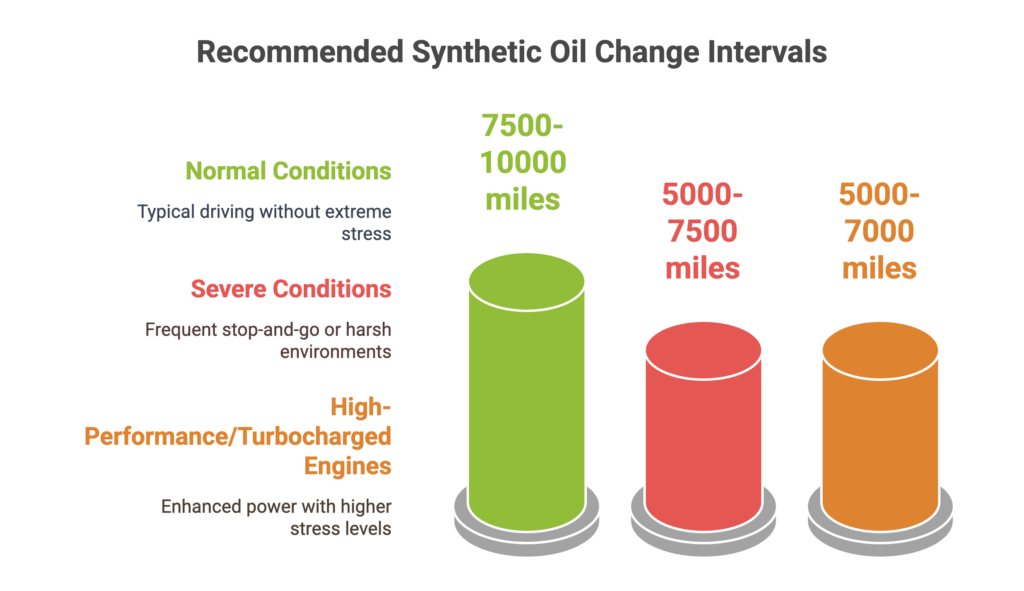
Generally, synthetic oil change frequency ranges from roughly 5,000 to 7,500 miles for typical daily driving, and up to 10,000 miles for many newer engines under normal conditions. In severe service—short trips, dusty roads, towing, or extreme heat—the interval should be shorter, often 3,000 to 5,000 miles. Always check the owner's manual and the vehicle's oil-life monitor for the factory-recommended target.
Synthetic oils offer improved oxidation resistance, better high-temperature stability, and additives that keep engines cleaner. However, the interval depends on oil quality (full synthetic vs. synthetic blend), vehicle design, and maintenance history. The oil-life monitor uses sensor data to estimate change time, but it is not infallible. Environmental conditions, driving style, and engine type all influence the actual service needs.
Key Characteristics
Longer drain intervals are a hallmark of modern synthetic oils, paired with improved viscosity behavior across temperature swings. They maintain film strength at high temperatures and resist breakdown better than conventional oils. When paired with the correct viscosity grade and OEM specifications, synthetic oils support quieter cold starts, cleaner piston rings, and reduced sludge buildup. Not all engines benefit equally, so follow manufacturer guidance.
Who It Suits
Drivers logging extensive highway mileage, operating in extreme climates, or towing heavy loads tend to benefit from synthetic oil changes. Newer turbocharged and direct-injected engines often rely on synthetic oil for protection during high heat and rapid engine ramp-ups. High-mileage engines may also gain from synthetic blends designed to cushion seals and reduce consumption. Conversely, older engines with unique wear patterns may require tailored maintenance.
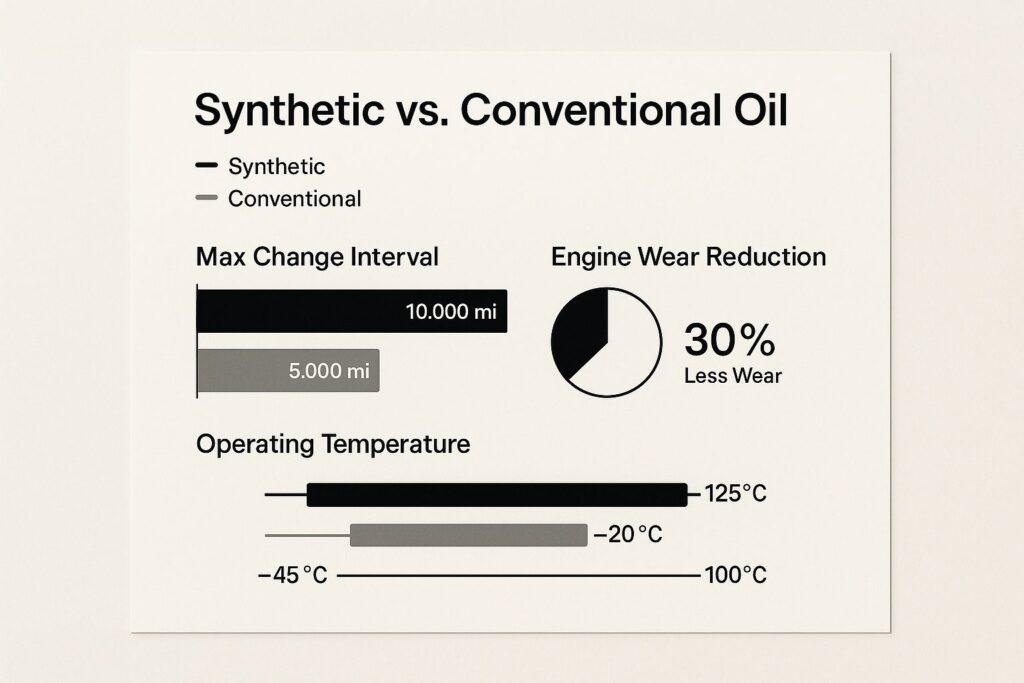
What Stands Out: Strengths of synthetic oil change frequency include longer drain intervals in many environments, improved protection during cold starts, and better resistance to oxidation and sludge. These factors can translate to fewer visits to the shop and improved engine cleanliness, especially in modern engines designed for tight tolerances and turbocharging. The ability to operate with stable viscosity across a wide temperature range is another practical edge.
Trade-Offs: The main downside is cost; synthetic oil and compatible filters typically carry a higher upfront price than conventional options. Some older engines may not realize the full benefits, and relying solely on monitor readings without periodic inspection can miss leaks or unusual wear. In very harsh climates or with heavy towing, aggressive interval extensions risk unseen problems.
Practical considerations start with the owner's manual, correct viscosity and API specification, and the vehicle's oil-life monitor if equipped. Weather, towing, and frequent short trips can shorten the effective interval even with full synthetic oil. Common questions include whether it’s safe to stretch intervals and whether mixing synthetic with conventional oil is acceptable; the guidance is to avoid mixing long-term and always revert to OEM recommendations. In short, synthetic oil change frequency is a tool to balance protection, cost, and reliability.